About the examples: Examples and screenshots in this guide use BEAT, a demo company in a Dynamics 365 test environment. Use your own company's codes and values instead of copying them.
Setup steps on this page
Set up Fault causes
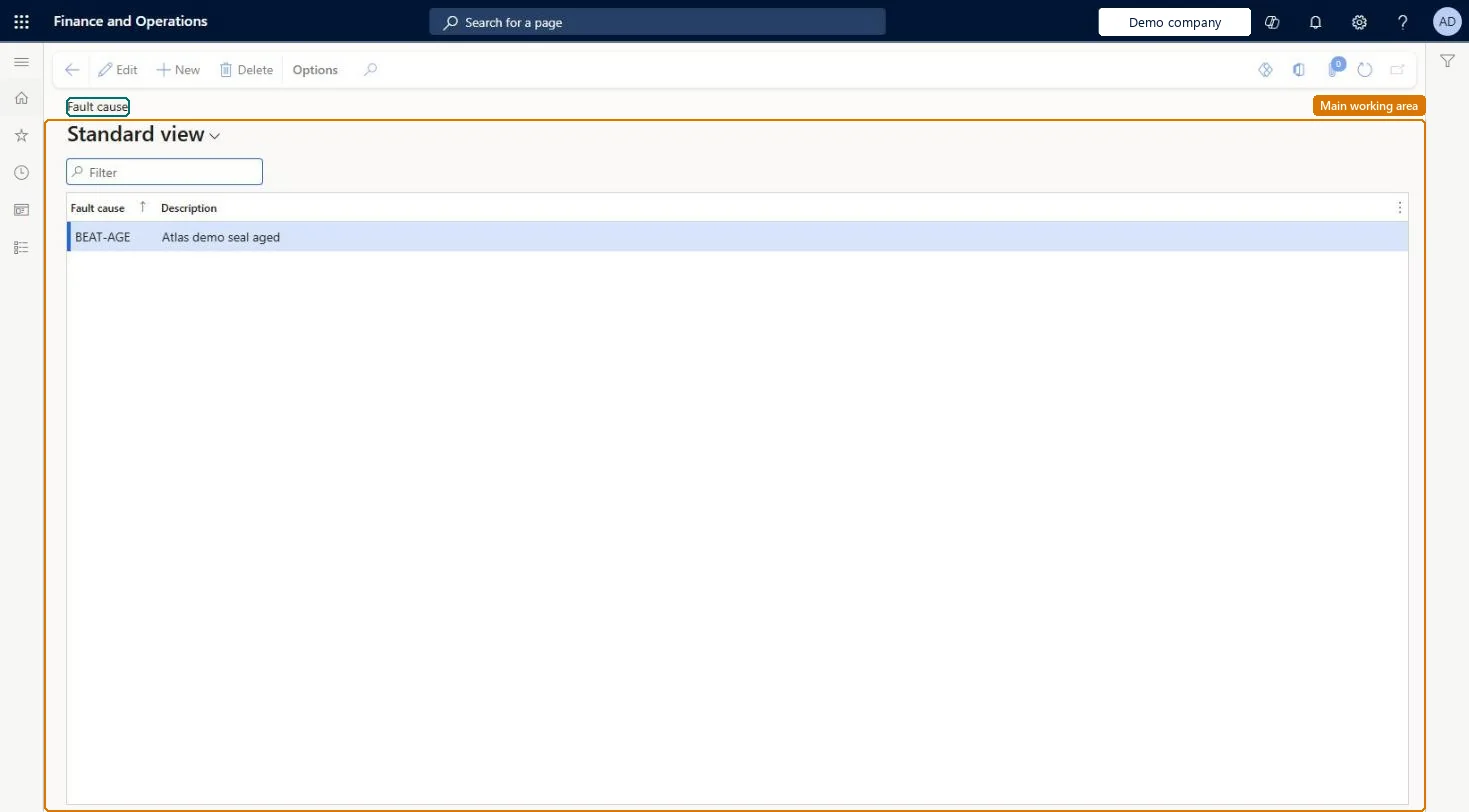
Use this page to create the fault causes that can be added to a work order or a maintenance request when a fault is recorded.
Steps from Microsoft
Go to Asset management > Setup > Fault > Fault causes.
Select New to create a record.
In the Fault cause field, enter a name for the fault cause.
A list of known root causes, kept short enough to report onFault causes are added to work orders and maintenance requests when a fault is recorded, so a controlled list makes cause analysis possible.
Renaming a cause to reuse it, which changes the name on existing fault registrations.
Solution architect
5Design impact
Can it be undone
Reversible: Names can be changed; the change shows on related registrations.
If you change it later
Renaming a fault cause updates the name on existing fault registrations. Microsoft Learn
Technical architect
6Technical
Menu item
EntAssetFaultCauseChecked in Dynamics 365
Form
EntAssetFaultCauseChecked in Dynamics 365
Table
EntAssetFaultCauseShown as “FAULT CAUSE” in Record infoKey field: FaultCauseIdChecked in Dynamics 365
Data entities
EntAssetMaintenanceFaultCauseEntityAsset management fault cause Checked in Dynamics 365
To set it up or change itMaintenance manager EntAssetMaintenanceManagerTo use itMaintenance clerk EntAssetMaintenanceClerkGive people one of these roles. On this system, 2 roles can open this page.Checked in Dynamics 365
Developer
7Developer
Open it by URL
https://<your-environment>/?mi=EntAssetFaultCause
Integrate with
EntAssetMaintenanceFaultCauseEntity data entity Checked in Dynamics 365