BeyondERP.Newsletter
Menu

Job page · Accounts receivable

Automatic netting

A process that runs automatic netting once, based on the active netting rules.

Business process
Use netting agreements to settle customer balances with vendor balances in Dynamics 365 Finance
Menu item
Action:CustVendNettingProposalBatch
Show what matters for
PAGE GUIDEWhat the page does and how to use it7 sections. Choose a role to highlight what matters to you.
Everyone

1What it is and why

What it isA process that runs automatic netting once, based on the active netting rules.
What you do hereUse this page to trigger a one-time automatic netting of open customer and vendor balances under the selected netting agreements.
ExampleRunning netting before creating the payment journal, so that only the remaining open amounts between customers and vendors are paid.
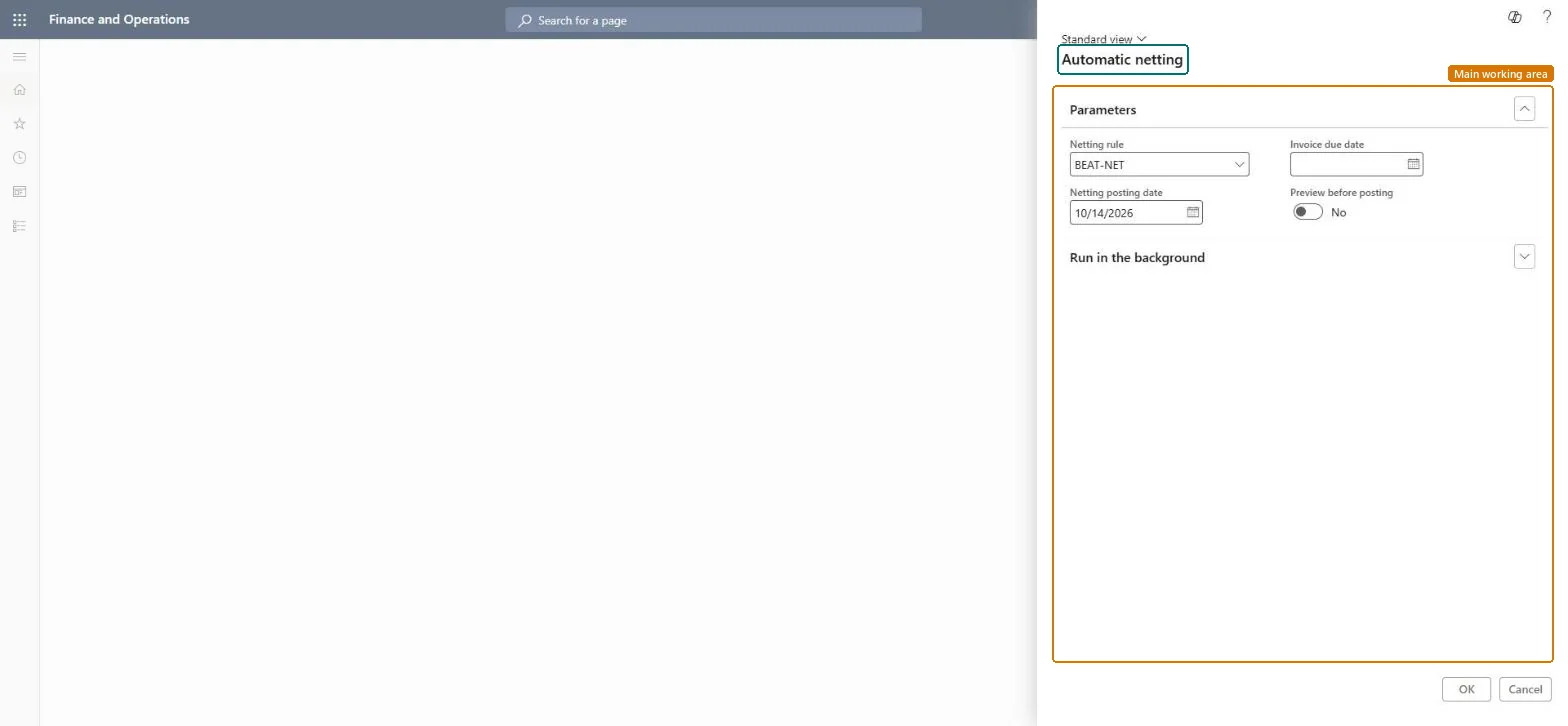
Automatic netting page in Dynamics 365
The page in Dynamics 365. page title tab to open what to set or check
Functional consultant · Solution architect

2Where it fits

End user · Functional consultant

3How to do it

About the examples: Examples and screenshots in this guide use BEAT, a demo company in a Dynamics 365 test environment. Use your own company's codes and values instead of copying them.

When to run it

When to run itBefore you create customer or vendor payment journals, so only the remaining open amounts are paid, from the payment area of Accounts receivable.
How oftenBefore each payment run, as Learn describes the netting flow.
Batch settingsFor regular netting, schedule it with Process automation in Cash and bank management instead of this one-time run.
What the output showsPosted netting journals that settle the selected customer and vendor invoices for each active agreement pair. Invoices that weren't netted are often already in a payment journal or outside the rule's criteria.

Source: Microsoft Learn

Steps from Microsoft

  1. Go to Accounts receivable > Payments > Netting > Automatic netting.
  2. Select the Netting rule; it decides the netting sequence, which netting agreements are in scope and whether credit and debit notes are included.
  3. Check the Netting posting date and enter an Invoice due date so only invoices due by that date are netted.
  4. Turn on Preview before posting to review the proposed customer and vendor pairs first, then run it.
  5. Open Netting history to review the netted pairs, and print netting advice to send to the customer or vendor.

Source: Microsoft Learn

Test checklist

  1. Netting history shows the expected customer and vendor pairs.
  2. The netted customer and vendor invoices are settled for the netting amount.
  3. Open balances left after netting match what you expected to pay or collect.

Source: Microsoft Learn

Solution architect

4Design impact

Can it be undoneYes, by reversing: Select Reverse netting on the Netting history page to unsettle the invoices and reverse the netting journal. Microsoft Learn
If you change it laterTransactions that are already in a payment journal aren't netted, so netting should run before payment journals are created. Microsoft Learn
Technical architect

5Technical

Menu itemAction:CustVendNettingProposalBatch Checked in Dynamics 365
FormCustVendNettingProposalDialog Checked in Dynamics 365
Roles to set it up and use itTo use itAccounts receivable payments clerk PaymAccountsReceivablePaymentsClerkAccounts payable payments clerk PaymAccountsPayablePaymentsClerkGive people one of these roles. On this system, 2 roles can run this page.Checked in Dynamics 365
Developer

6Developer

Open it by URLhttps://<your-environment>/?mi=Action:CustVendNettingProposalBatch
Everyone

7Sources