PAGE GUIDEWhat the page does and how to use it8 sections. Choose a role to highlight what matters to you.
Everyone
1What it is and why
What it is
A setup page where you create standard measurements used on performance goals and reviews.
What you do here
Use this page to define measurements as dates, amounts, quantities, percentages or rating-model based values, so that targets and actual results can be tracked on goals and reviews.
Example
For example, BEAT sets up Number of new partners (quantity), Revenue growth (percentage) and Customer rating (based on the 5-level rating model); a goal uses Number of new partners with target 5, and the year-end review stores a snapshot showing 4 achieved.
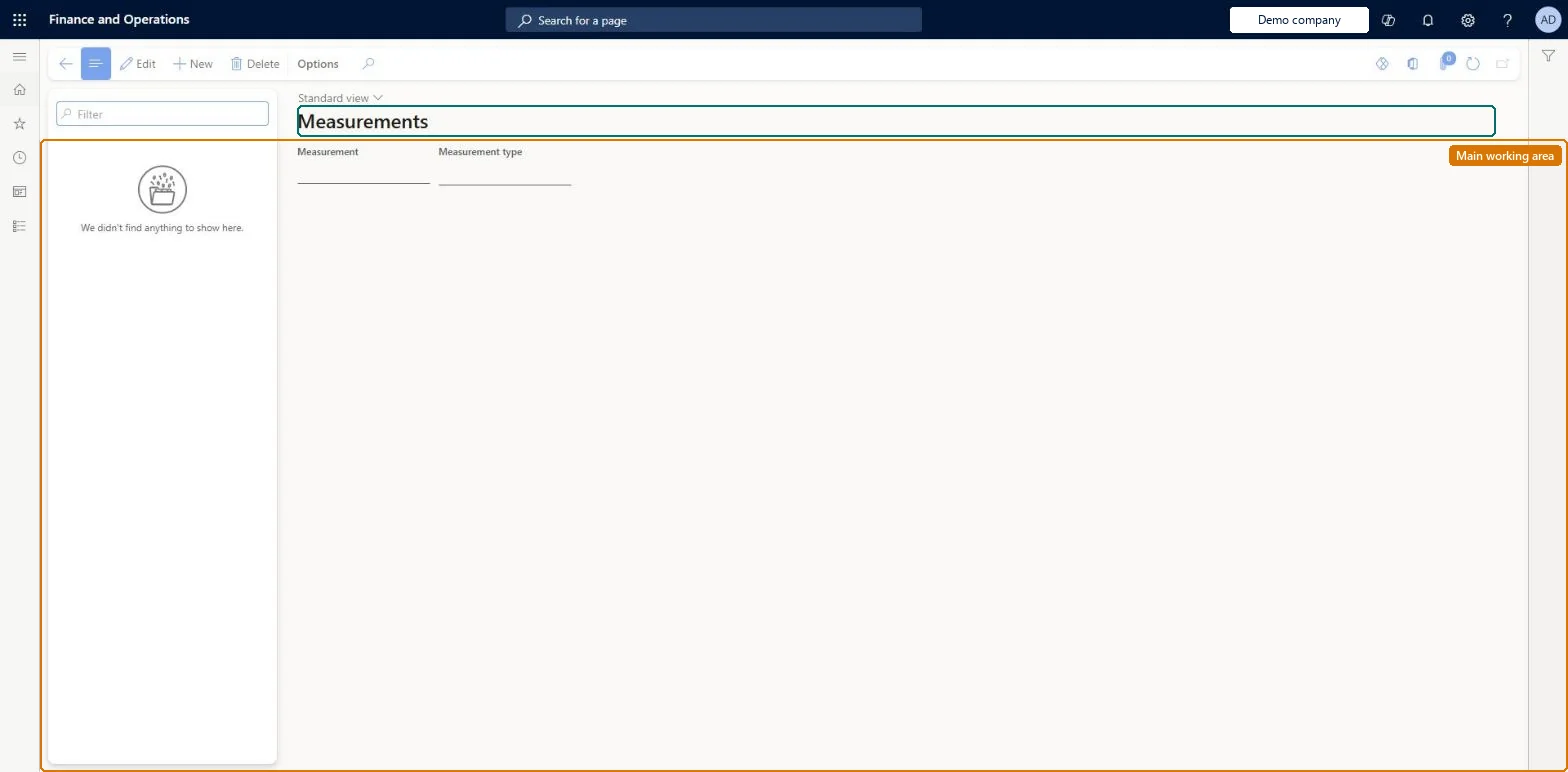
The page in Dynamics 365. page title tab to open what to set or check
About the examples: Examples and screenshots in this guide use BEAT, a demo company in a Dynamics 365 test environment. Use your own company's codes and values instead of copying them.
Setup steps on this page
Set up Measurements
Use this page to define measurements as dates, amounts, quantities, percentages or rating-model based values, so that targets and actual results can be tracked on goals and reviews.
Steps from Microsoft
Go to Human resources > Performance > Setup > Measurements.
Use the Filter box to find a measurement in the list.
Select New and enter the Measurement and Measurement type.
Select Edit to change a selected measurement, or Delete to remove it.
A short standard list of measurements by type (date, amount, quantity, percentage or rating model), set up before goals are created.Goals and reviews select measurements from this list to track target and actual results.
Which measurements should be standard?Expecting a later correction to a measurement result to show on a finalised review. When a review is finalised a snapshot of its measurements is stored and kept as the history at the time of the review.Test: Measurement on a goal
Feature management and licence
Licence or add-in
HR sets up performance management; employees and managers use goals, journals and reviews in Employee self service and Manager self service. No Feature management feature is needed for this page.
Shared: Data management lists the Measurements entity as shared, so the records are not kept per legal entity and every company sees the same list. Checked in Dynamics 365
Can it be undone
Hard to reverse: Measurements (dates, amounts, quantities, percentages or rating-model based) can be edited, but once a review that uses them is finalised a snapshot of the measurements is stored, so finalised reviews keep the old values. Microsoft Learn
If you change it later
Measurement results on a review are frozen in a snapshot when the review is finalized. Microsoft Learn
Technical architect
6Technical
Menu item
HcmMeasurementChecked in Dynamics 365
Form
HcmMeasurementChecked in Dynamics 365
Table
HcmMeasurementShown as “MEASUREMENTS” in Record infoKey field: MeasurementIdChecked in Dynamics 365
Data entities
HcmMeasurementEntityMeasurements Checked in Dynamics 365
Who can open it
PrivilegesMaintain privilege for measurements HcmMeasurementMaintainView privilege for measurements HcmMeasurementViewDutiesEnable performance process HcmPerformanceProcessEnableInquire into performance process HcmPerformanceProcessInquire2 security rolesHuman resource assistant HcmHumanResourceAssistantHuman resource manager HcmHumanResourceManagerChecked in Dynamics 365
Roles to set it up and use it
To set it up or change itHuman resource manager HcmHumanResourceManagerTo use itHuman resource assistant HcmHumanResourceAssistantGive people one of these roles. On this system, 2 roles can open this page.Checked in Dynamics 365
Developer
7Developer
Open it by URL
https://<your-environment>/?mi=HcmMeasurement
Integrate with
HcmMeasurementEntity data entity Checked in Dynamics 365
Data migration
HcmMeasurementEntity Measurements. Shared by all companies.Load order: Measurements load in the Employee development template; Rating models load earlier in the same template for rating-based measurements.Load first: HcmRatingModelEntityMicrosoft Learn