BeyondERP.Newsletter
Menu

Setup page · Landed cost

Refrigeration types

A setup page where you define refrigeration types, an extra grouping used to identify shipping containers, usually refrigerated ones.

Used by
Landed cost manager
Business process
Manage freight and transportation
Menu item
ITMRefrigerationTypeTable
Main table
ITMRefrigerationTypeTable
Data entity
ITMShippingContainerRefrigerationTypeEntity
Setup steps
1 on this page
Show what matters for
PAGE GUIDEWhat the page does and how to use it7 sections. Choose a role to highlight what matters to you.
Everyone

1What it is and why

What it isA setup page where you define refrigeration types, an extra grouping used to identify shipping containers, usually refrigerated ones.
What you do hereUse this page to view, add and remove refrigeration type records. A refrigeration type is then selected on the shipping container when it is set up on the All shipping containers page.
ExampleFor example, you create a Reefer refrigeration type and select it on every chilled container so that refrigerated shipments can be grouped and identified.
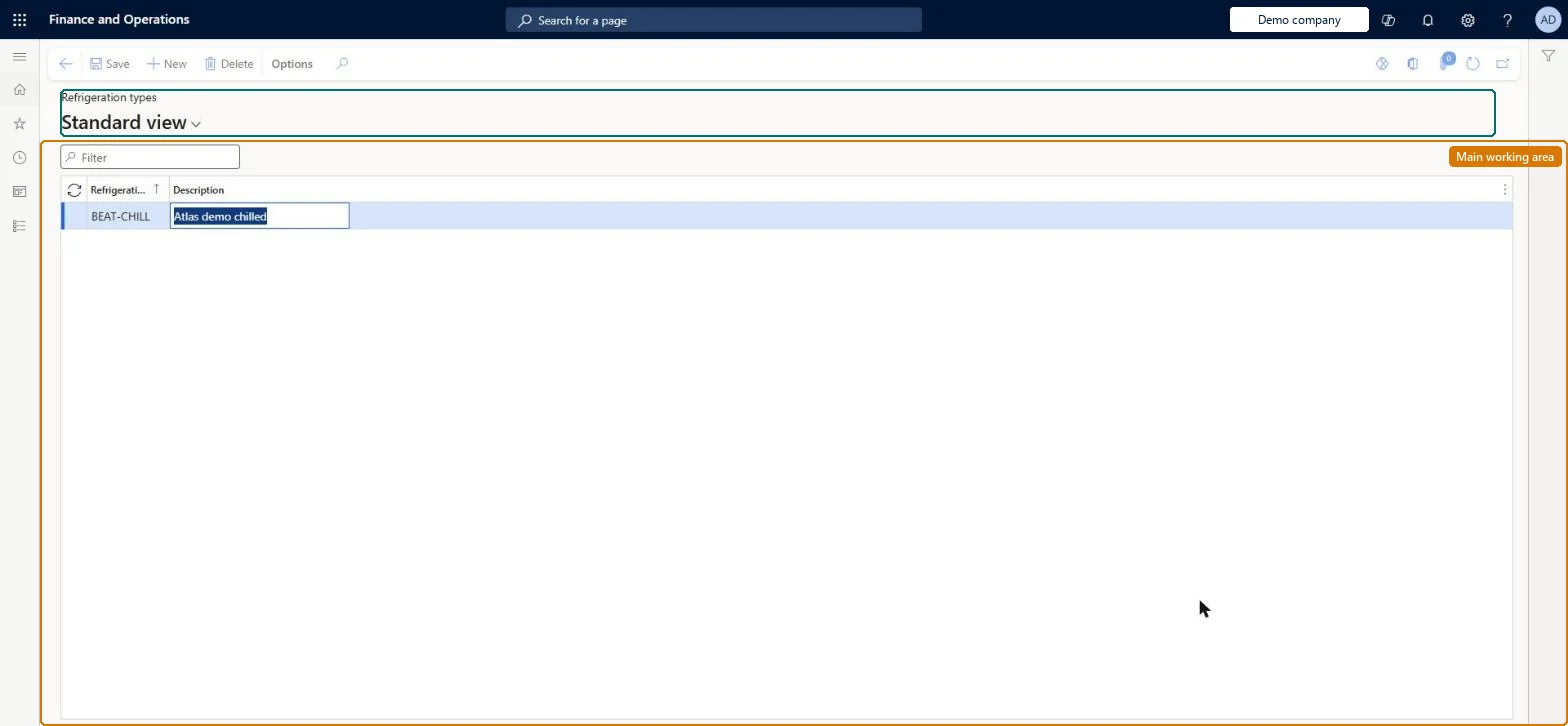
Refrigeration types page in Dynamics 365
The page in Dynamics 365. page title tab to open what to set or check
Functional consultant · Solution architect

2Where it fits

Business processManage freight and transportation
Menu pathLanded cost › Containers setup › Refrigeration types
Used next byAll shipping containers Microsoft Learn
Related pagesUnit types Microsoft Learn Shipping containers Microsoft Learn
End user · Functional consultant

3How to do it

About the examples: Examples and screenshots in this guide use BEAT, a demo company in a Dynamics 365 test environment. Use your own company's codes and values instead of copying them.

Setup steps on this page

Set up Refrigeration types

Use this page to view, add and remove refrigeration type records. A refrigeration type is then selected on the shipping container when it is set up on the All shipping containers page.

Steps from Microsoft

  1. Go to Landed cost > Containers setup > Refrigeration types.
  2. Select New to add a record.
  3. In Refrigeration type, enter a unique identification name or number.
  4. In Description, enter a description of the refrigeration type.
  5. Save the record.

Source: Microsoft Learn

Fields on the page

FieldWhat it meansTable column
Refrigeration typeThe unique name or number of the refrigeration type.Microsoft Learn RefrigerationTypeId
DescriptionA description of the refrigeration type.Microsoft Learn Description

Test checklist

  1. Create a refrigeration type with a description.
  2. Open a refrigerated container from All shipping containers and select the Refrigeration type on the Header view.
  3. Check the value is saved and visible on the container.

Source: Microsoft Learn

Solution architect

4Design impact

Can it be undoneReversible: Refrigeration types are an extra grouping and identification on shipping containers, so they can be added or removed at any time. Microsoft Learn
Technical architect

5Technical

Menu itemITMRefrigerationTypeTable Checked in Dynamics 365
FormITMRefrigerationTypeTable Checked in Dynamics 365
TableITMRefrigerationTypeTableShown as “REFRIGERATION TYPES” in Record infoChecked in Dynamics 365
Data entitiesITMShippingContainerRefrigerationTypeEntityRefrigeration types Checked in Dynamics 365
Who can open itPrivilegesMaintain refrigeration types ITMRefrigerationTypeTableMaintainDutiesMaintain Landed cost setup ITMSetupMaintain
1 security roleLanded cost manager ITMManager
Checked in Dynamics 365
Roles to set it up and use itTo set it up or change itLanded cost manager ITMManagerGive people one of these roles. On this system, 1 role can open this page.Checked in Dynamics 365
Developer

6Developer

Open it by URLhttps://<your-environment>/?mi=ITMRefrigerationTypeTable
Integrate withITMShippingContainerRefrigerationTypeEntity data entity Checked in Dynamics 365
Everyone

7Sources

KEEP EXPLORING

More in Landed cost.

Open the other pages and setup steps in this module, or go back to the Atlas Hub to search every page.