System administrationSecuritySegregation of duties
SysSecSegregationOfDutiesConflictsAll
Used by
Security administrator
Business process
Administer system features
Menu item
SysSecSegregationOfDutiesConflictsAll
Main table
SecuritySegregationOfDutiesConflict
Data entity
SystemSegregationOfDutiesConflictEntity
Setup steps
1 on this page
Show what matters for
PAGE GUIDEWhat the page does and how to use it8 sections. Choose a role to highlight what matters to you.
Everyone
1What it is and why
What it is
A list page that shows the user role assignments that were allowed even though they broke a segregation of duties rule.
What you do here
Use this page to review overridden role assignments and the reasons that were recorded for them.
Example
For example, an auditor asks why one BEAT user holds both Accounts payable clerk and Purchasing agent; the page shows the allowed assignment with its Reason for override.
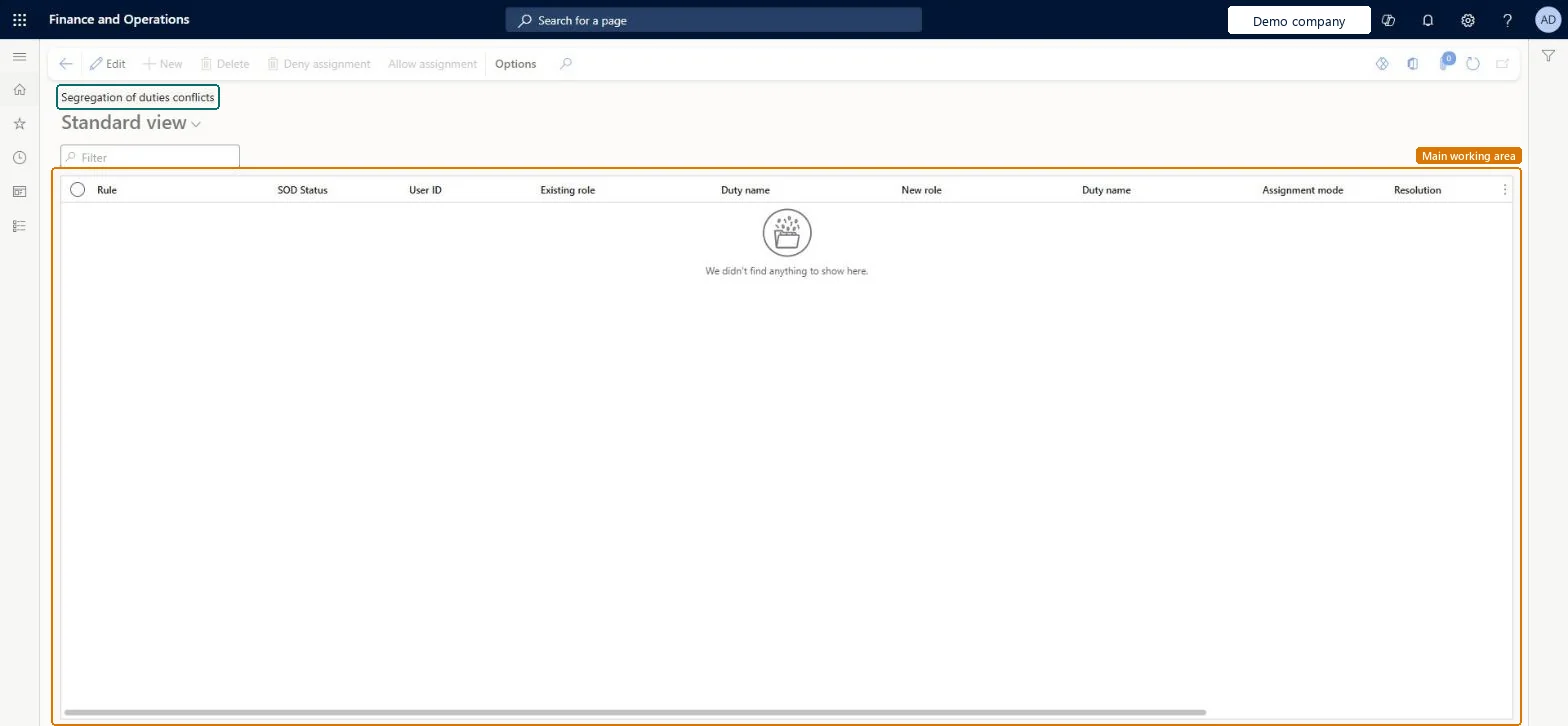
The page in Dynamics 365. page title tab to open what to set or check
About the examples: Examples and screenshots in this guide use BEAT, a demo company in a Dynamics 365 test environment. Use your own company's codes and values instead of copying them.
Setup steps on this page
Review overridden segregation of duties conflicts
Use the page at each access review to check every override still has a valid reason.
Steps from Microsoft
Go to System administration > Security > Segregation of duties > Segregation of duties conflicts.
Type in the Filter box to find a conflict.
Check the Rule, SOD Status, User ID, Existing role, New role, Assignment mode and Resolution columns.
Select a row, then select Edit to open it.
Select Deny assignment or Allow assignment on the Action Pane.
Review the list with internal control each quarter and remove role assignments whose reason no longer appliesEvery override is a known control gap; the reason recorded here is the evidence auditors ask for.
Shared: conflicts are logged for the whole environment. Microsoft Learn
Can it be undone
Reversible: An allowed assignment can be withdrawn by removing the user from the role on Assign users to roles. Microsoft Learn
If you change it later
Every role assignment that was allowed despite a conflict is listed here with its reason, which is what auditors review. Microsoft Learn
Technical architect
6Technical
Menu item
SysSecSegregationOfDutiesConflictsAllChecked in Dynamics 365
Form
SysSecSegregationOfDutiesConflictChecked in Dynamics 365
Table
SecuritySegregationOfDutiesConflictShown as “Segregation of duties conflict” in Record infoChecked in Dynamics 365
Data entities
SystemSegregationOfDutiesConflictEntitySecurity segregation of duties conflict Checked in Dynamics 365RetailTrialSystemSecurityUserRoleAssociationEntityRetail trial user role association (the retail trial variant of the user role associations; Open in Excel offers it on this page) Checked in Dynamics 365SystemSecurityUserRoleAssociationEntitySecurity user role association (only the user role assignments behind each conflict; Open in Excel offers it on this page) Checked in Dynamics 365SystemSecurityUserRoleEntitySystem security user role organization (only the organization limits of the user roles behind each conflict; Open in Excel offers it on this page) Checked in Dynamics 365
Who can open it
PrivilegesMaintain the segregation of duties rules SysSecSegregationOfDutiesMaintainDutiesMaintain security settings SysSecSecurityMaintain1 security roleSecurity administrator SysSecSecurityAdministratorChecked in Dynamics 365
Roles to set it up and use it
To set it up or change itSecurity administrator SysSecSecurityAdministratorGive people one of these roles. On this system, 1 role can open this page.Checked in Dynamics 365
Actions on the page
Options: Personalize, Page options, ShareChecked in Dynamics 365
SystemSegregationOfDutiesConflictEntity data entity Checked in Dynamics 365
Data migration
SystemSegregationOfDutiesConflictEntity (Security segregation of duties conflict): shared by all companies; not in Microsoft's default templates.Load order: Conflicts are logged in each environment. Move them only to keep an audit trail; load after users and roles.Load first: User information, Security user role associationChecked in Dynamics 365