About the examples: Examples and screenshots in this guide use BEAT, a demo company in a Dynamics 365 test environment. Use your own company's codes and values instead of copying them.
Step by step, with screenshots
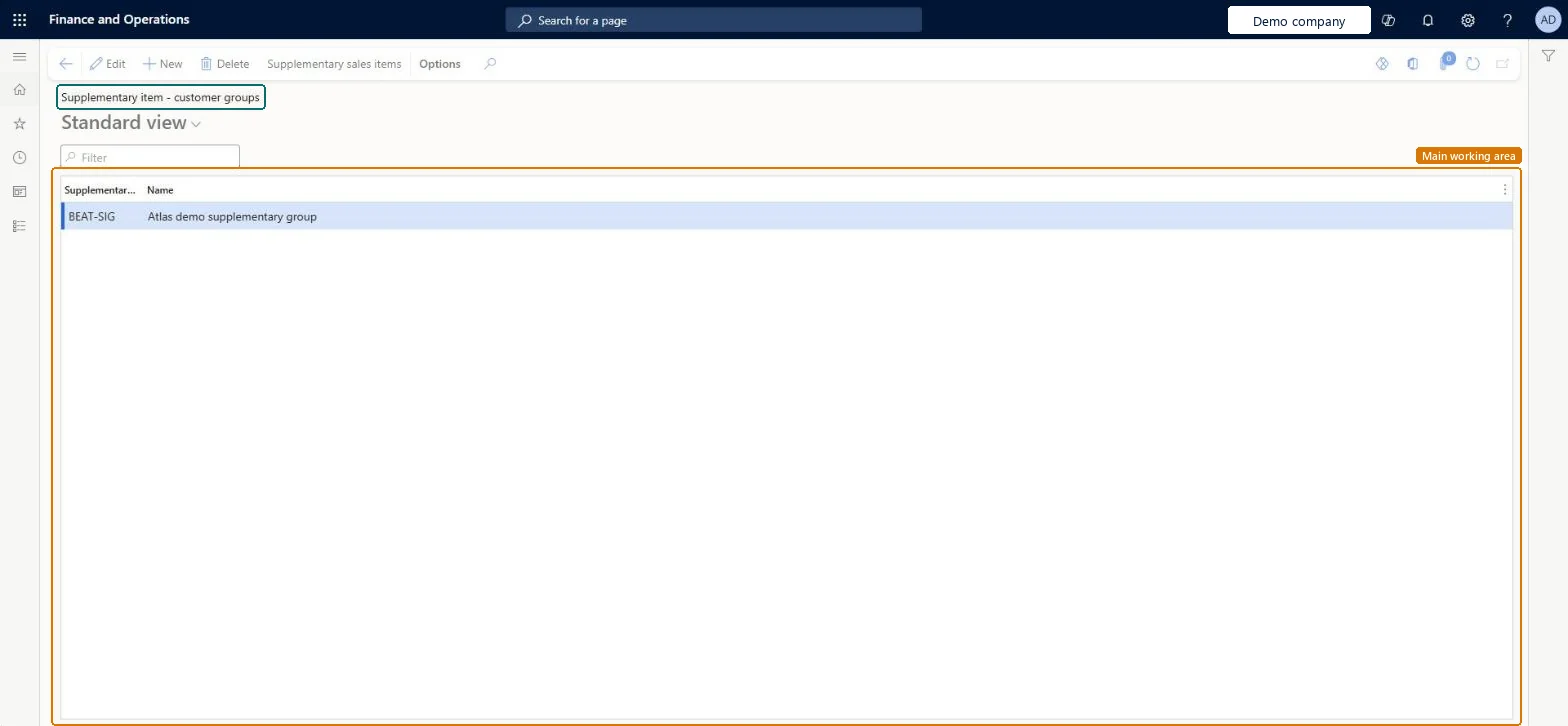
Set up Supplementary item - customer groups1 screen
Screen 1
Create a customer group for supplementary items
Go to Sales and marketing > Setup > Items > Supplementary item - customer groups
Select New
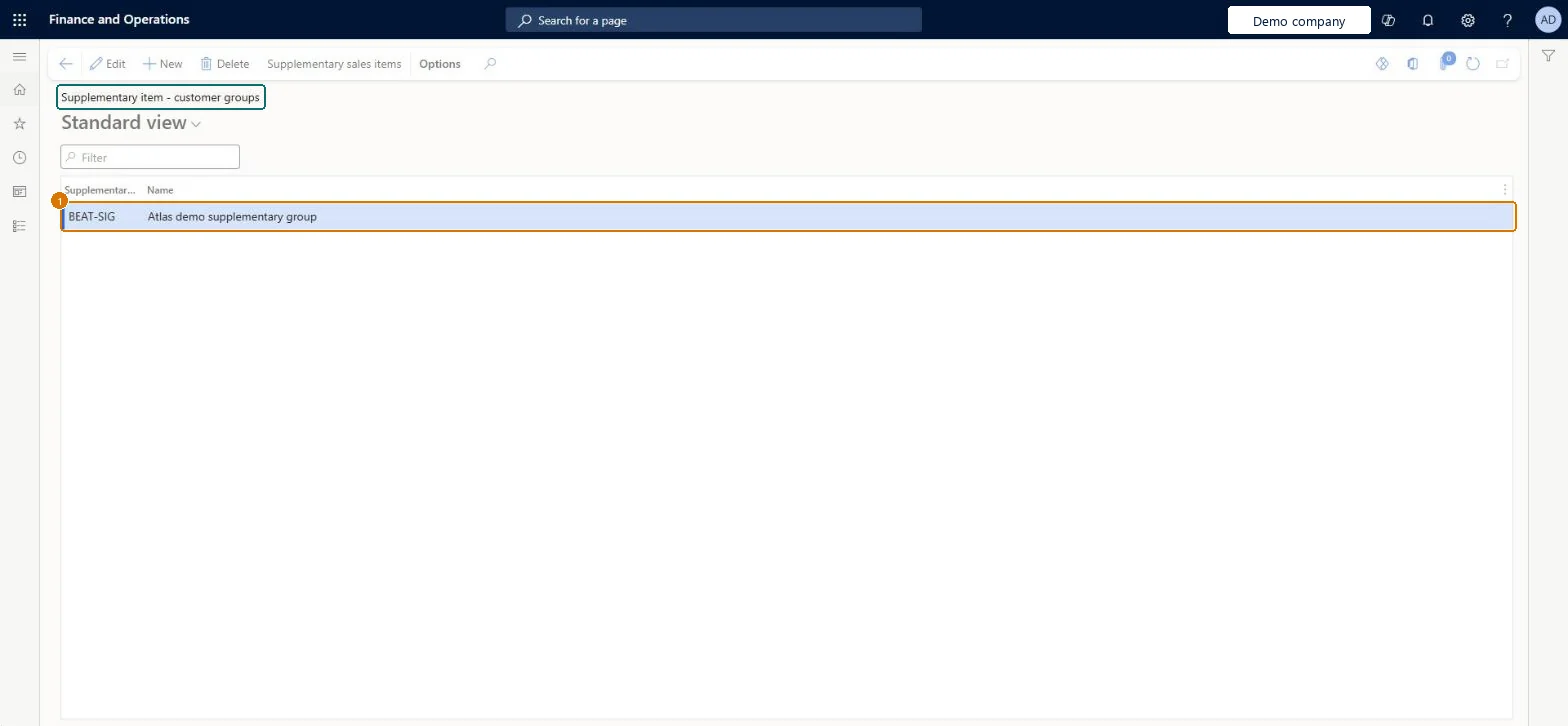
Enter the group code and name
Select Save
Assign the group to customers, then use Supplementary sales items to add the items that are offered with an order
1Supplementary item group
BEAT-SIG
Name
Supplementary group
Show the full screen page title tab to open what to set or check
How to use it
Go to Inventory management > Setup > Supplementary items > Supplementary item - customer groups.
Select New to add a supplementary item group.
Enter the group code and the Name.
Select Supplementary sales items on the Action Pane to open the supplementary sales items.
Select Save.
Source: Checked in Dynamics 365
Fields on the page
Field
What it means
Example
Table column
Supplementary item group
PROMO
GroupId
Name
The descriptive name of the supplementary item group.Checked in Dynamics 365
Customer groups only for customers who get different supplementary items (for example free accessories for one channel).Supplementary items propose related products, required, optional or free; a customer group lets one set of proposals apply to many customers.
SuppItemGroupShown as “Supplementary item groups” in Record infoKey field: Module, GroupIdChecked in Dynamics 365
Data entities
InventSupplementaryProductCustomerGroupEntitySupplementary item - customer groups Microsoft data model InventSupplementaryProductProductGroupEntitySupplementary item - item groups Microsoft data model InventSupplementaryProductVendorGroupEntitySupplementary item - vendor groups Microsoft data model
Who can open it
PrivilegesMaintain customer supplementary item groups SuppItemGroup_CustMaintainView customer supplementary item groups SuppItemGroup_CustViewDutiesEnable quotation to sales order process RentalSalesQuotationToSlsOrdProcessEnableEnable quotation to sales order process SalesQuotationToSalesOrderProcessEnableInquire into quotation to sales order reference data SalesQuotationToSalesOrderRefDataInquir9 security rolesAccounts receivable clerk CustInvoiceAccountsReceivableClerkAccounts receivable manager CustInvoiceAccountsReceivableManagerAccounts receivable centralized payments clerk PaymAccountsReceivableCentralPaymClerkAccounts receivable payments clerk PaymAccountsReceivablePaymentsClerkRental coordinator agent RentalCoordinatorAgentRental manager RentalManagerRental sales manager RentalSalesManagerRetail service RetailServiceSales manager TradeSalesManagerChecked in Dynamics 365
Roles to set it up and use it
To set it up or change itSales manager TradeSalesManagerRetail service RetailServiceRental sales manager RentalSalesManagerRental manager RentalManagerRental coordinator agent RentalCoordinatorAgentTo use itAccounts receivable centralized payments clerk PaymAccountsReceivableCentralPaymClerkAccounts receivable payments clerk PaymAccountsReceivablePaymentsClerkAccounts receivable clerk CustInvoiceAccountsReceivableClerkGive people one of these roles. On this system, 9 roles can open this page.Checked in Dynamics 365
Actions on the page
Options: Personalize, Page options, ShareChecked in Dynamics 365
InventSupplementaryProductCustomerGroupEntity (Supplementary item - customer groups): loaded for each company, in Microsoft's default template 330 - Sales and marketing.Load order: Microsoft's default template 330 - Sales and marketing loads Supplementary item - customer groups at execution unit 1, level 30, sequence 10. Lower levels load first, and entities at the same level load in sequence order.Load first: the default templates at lower levels (System setup to General ledger)Microsoft Learn
Checked in a working Dynamics 365 system, version 10.0.49: the menu item, form, table and security, the page, the demo records and the values in the screenshots.