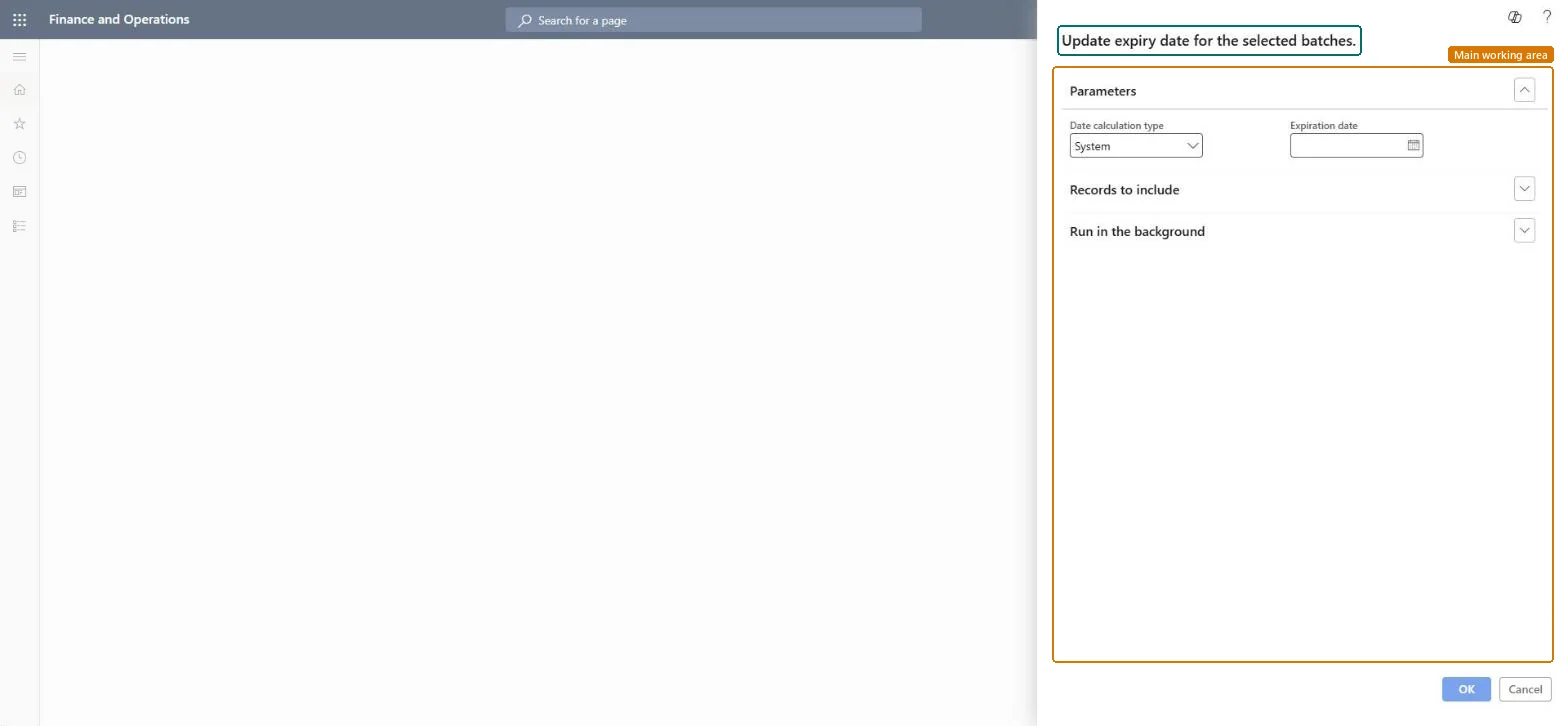
About the examples: Examples and screenshots in this guide use BEAT, a demo company in a Dynamics 365 test environment. Use your own company's codes and values instead of copying them.
When to run it
When to run it
When batch expiration dates must change, for example after the Shelf life period in days of the product changed or a batch was found to expire earlier or later.
How often
On demand, when expiration dates need to change.
Batch settings
Set up the batch job only when many batches are selected.
What the output shows
Updated expiration dates on the selected batches. Master planning and reservation rules that use shelf life follow the new date, so an unexpected expired batch usually means a wrong manufacturing date or shelf life period.
Go to Inventory management > Periodic tasks > Batches > Update expiry dates.
In Data calculation type, select System to set the expiration date to the batch's manufacturing date plus the shelf life period in days, or Fixed to enter the date yourself.
If you selected Fixed, enter the new date in Expiration date.
Select Select and filter the batches whose expiration date should change.
Select OK, then open the batches and check the new expiration dates; the batch is unusable after that date.
Yes, by running it again: Run the job again with the correct date or calculation type to overwrite the dates. Microsoft Learn
If you change it later
Changes the expiration date of the selected batches, which affects whether they can still be used, planned and sold. Microsoft Learn
Technical architect
5Technical
Menu item
action:PdsUpdateExpDateChecked in Dynamics 365
Form
DialogChecked in Dynamics 365
Roles to set it up and use it
To use itQuality control clerk InventQualityControlClerkShipping clerk InventShippingClerkPurchasing manager TradePurchasingManagerSales manager TradeSalesManagerWarehouse worker WMSWarehouseWorkerGive people one of these roles. On this system, 6 roles can run this page.Checked in Dynamics 365